About XJT Golf: Golf Ball Manufacturer Since 2004
“From my father’s hands to your game, we craft precision into every dimple. Excellence isn’t just a goal; it’s our heritage.”
— Sam, Second-Generation Leadership
XJT Golf is a golf ball manufacturer based in Xiegang, Dongguan, China. Our golf ball business began in 2004. Today, we manufacture two-piece range balls, two-piece and multilayer Surlyn balls, and three-piece and four-piece cast urethane balls for overseas brands, distributors, driving ranges and promotional projects.
Our OEM and private label work covers product selection, construction and core formulation, as well as logos, ball numbers, alignment lines and packaging. The ability to discuss those details took years to develop. We started with two machines and bought-in semi-finished products, then learned to make the core ourselves.
Golf Balls We Manufacture
Direct Factory Production · MOQ 3,000 pcs
Range balls
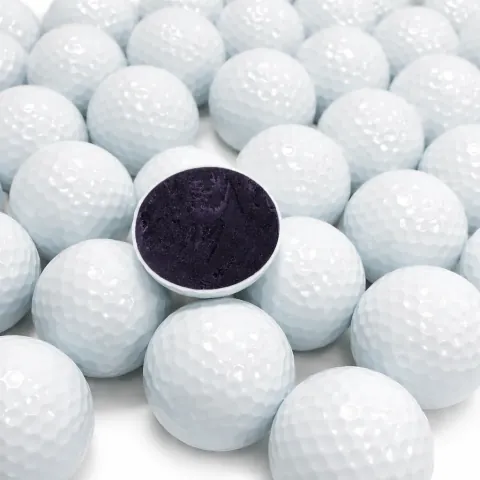
Request QuoteOur two-piece Surlyn range golf balls serve driving ranges, with options for color, practice markings, logos and bulk packaging. Separate two-piece models suit entry-level retail and promotional projects. Floating balls are available for water ranges.
Surlyn multilayer
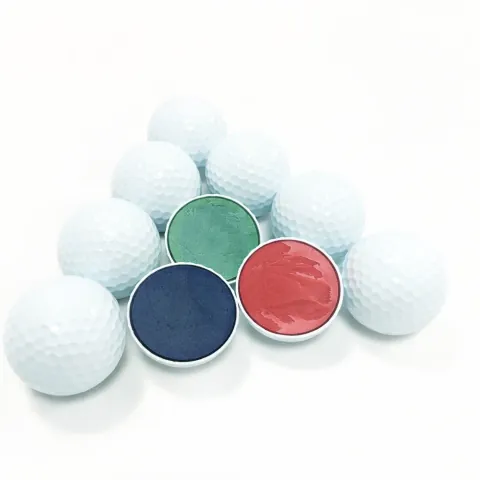
Learn MoreThe Surlyn range also includes three-piece designs with either a single rubber core and resin mantle or a dual rubber core, alongside four-piece balls. Layer count alone does not describe a ball’s construction.
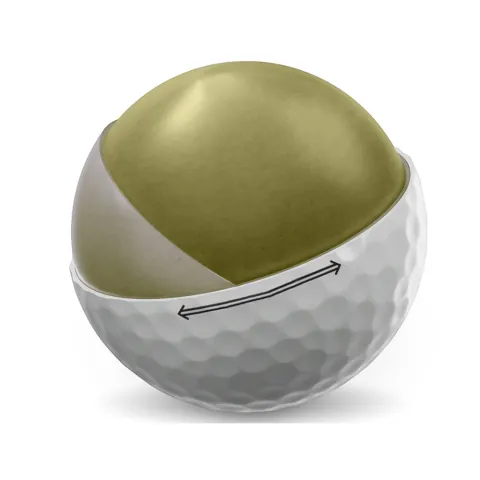
Cast Urethane B15/B16
Request QuoteFor brands considering cast urethane golf balls, our B15 three-piece model combines a polybutadiene core, a Surlyn mantle and a cast urethane cover. The B16 four-piece model uses two Surlyn mantle layers. Selection depends on the intended player, price position and performance requirements, followed by sample evaluation.
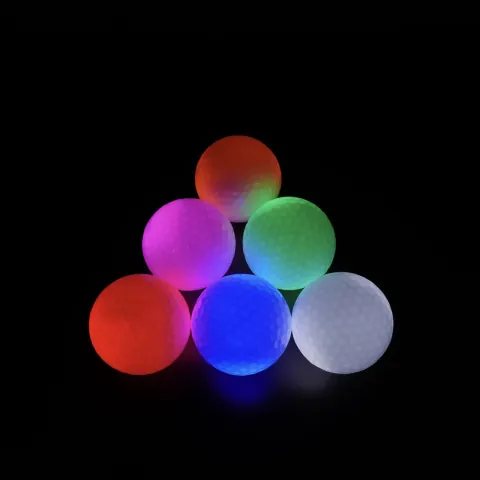
Specialty LED
Learn MoreLED, glow-in-the-dark and plated balls serve night events, recreational activities and gift projects, where appearance and packaging may be central to the brief.
How My Father Started Making Golf Balls
Our story, told by Sam, the second generation of the family behind XJT Golf.
My father was the third child in his family. People who knew him called him Cheng San. He moved from Chongqing to Guangdong to find work and met my mother at a shoe factory in Shenzhen.
After working with golf-related products, he started making golf balls with a partner in 2004. Their factory was in Guanlan, Shenzhen. With two machines, they processed promotional balls using purchased cores or semi-finished balls, adding covers and simple logos.
They could fill orders, but they could not formulate the core or control how it performed. That knowledge belonged to someone else.
In 2006, my father began studying core production. He bought vulcanizing equipment the following year and sought help from experienced technicians. He took them to meals, paid for instruction and learned from them. By 2008, we could formulate our own cores.
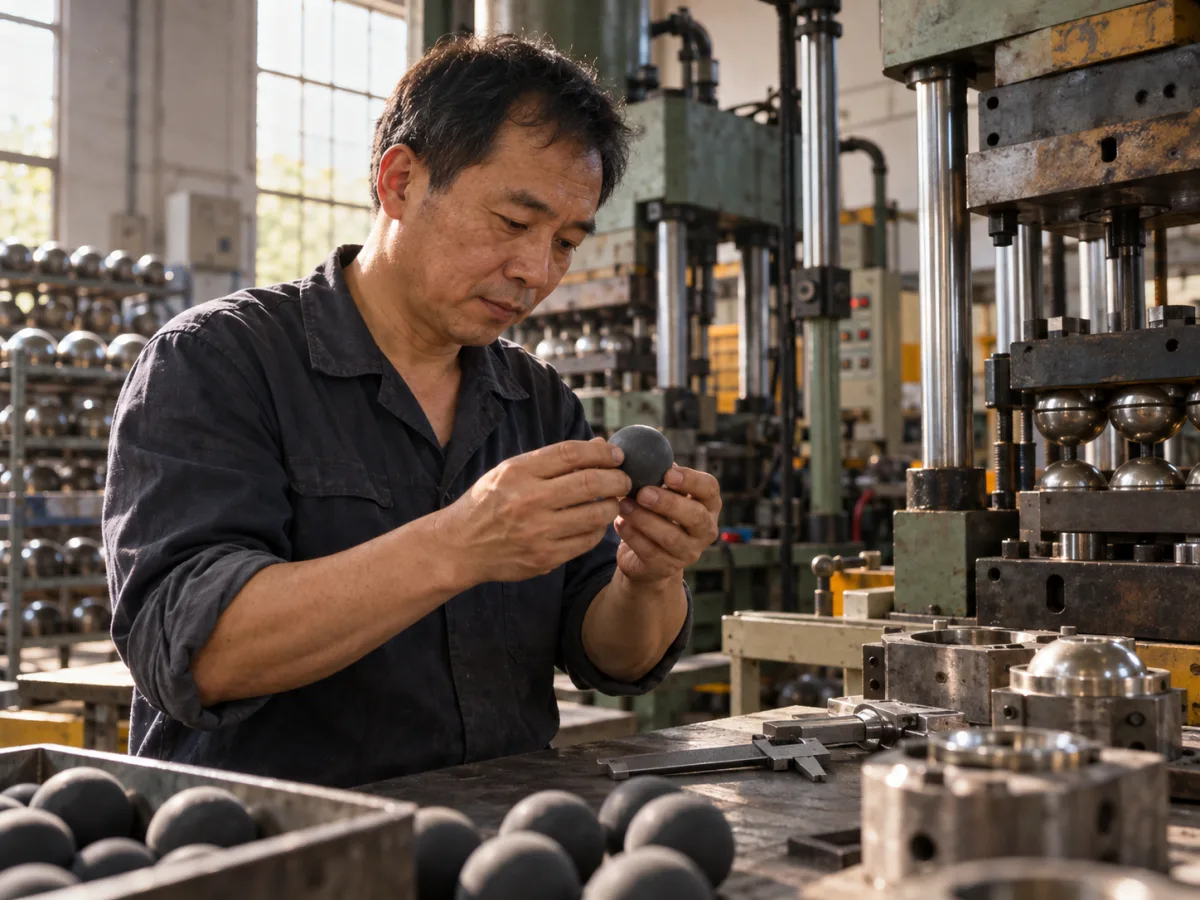
Cheng San in his workshop, developing early golf ball manufacturing processes.
Learning to Make More of the Ball
We developed a three-piece Surlyn ball in 2010 and a four-piece version in 2011. Work on TPU covers began in 2013, followed by three-piece and four-piece TPU balls in 2014. My father also worked with specialists from other industries on plated, LED and later RFID balls.
Customer feedback exposed problems we still needed to solve. Some customers reported cuts in our TPU covers after play. Those complaints helped drive his work on cast urethane.
He and his original partner began operating separately in 2016. He continued researching cast urethane and automated painting. High rent led us to move from Shenzhen’s Longhua area to Fenggang, Dongguan, in 2018. Our first cast urethane model followed in 2020.
Pandemic-related pressure and persistently high rent made the following years difficult. In 2023, we moved to Xiegang, where the factory is today. That year also brought a new generation of three-piece and four-piece cast urethane balls.
In 2026, we introduced further versions with changes to formulation and production processes aimed at improving distance. Development continues as these products enter the market.
What I Want to Carry Forward
My grandparents raised me in Chongqing while my parents worked in Guangdong. During summer holidays, I traveled to Guanlan to see them. At first, my grandfather accompanied me on the long coach journey. Later, I made the trip on my own, with the driver looking out for me along the way.
The factory became a familiar part of those visits. Some of the people working there, and friends my father met through the business, have known me since I was a child.
When I returned in 2025 to learn the business, I already knew the place and many of its people. Understanding the products and taking responsibility for the work was another matter. Our supervisors and sales manager have helped me learn.
Taking over a factory has never been my ambition in itself. What matters to me is carrying forward the spirit of my father and grandfather: how they faced difficulties, learned from others and kept going. Learning this business is one way I am finding meaning in my own work.
Inside Our Golf Ball Manufacturing Process
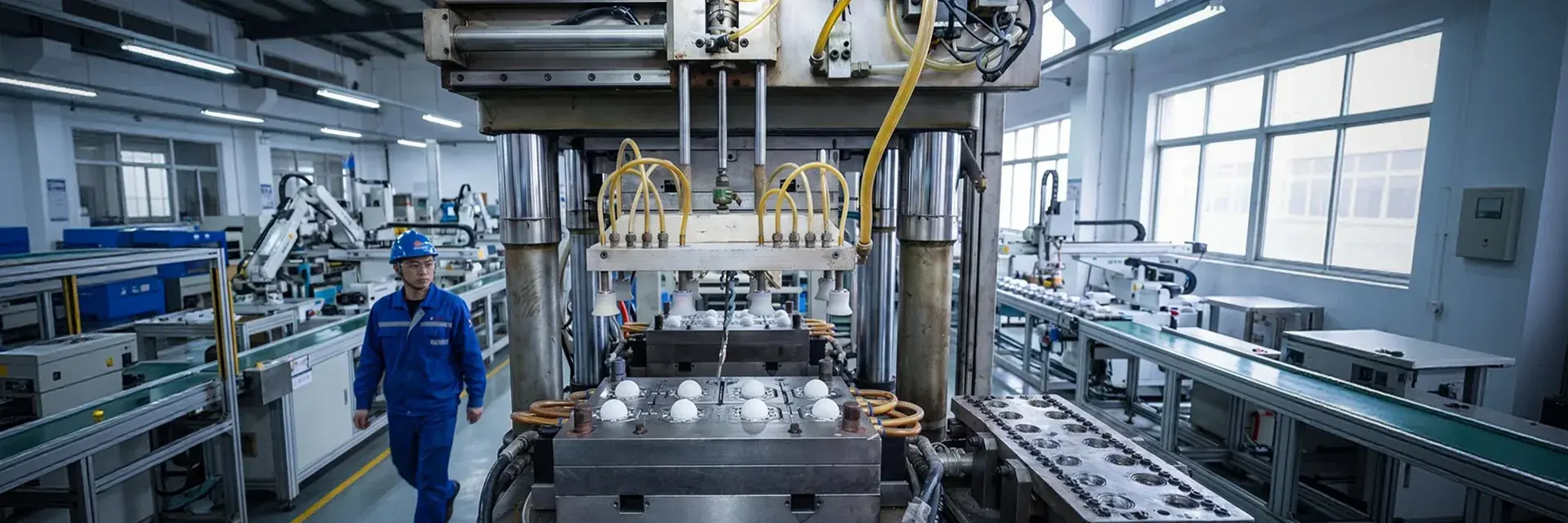
Production includes rubber mixing, core vulcanization, grinding, injection molding, trimming, urethane casting, coating, printing, inspection and packaging. The sequence depends on the construction and cover material.
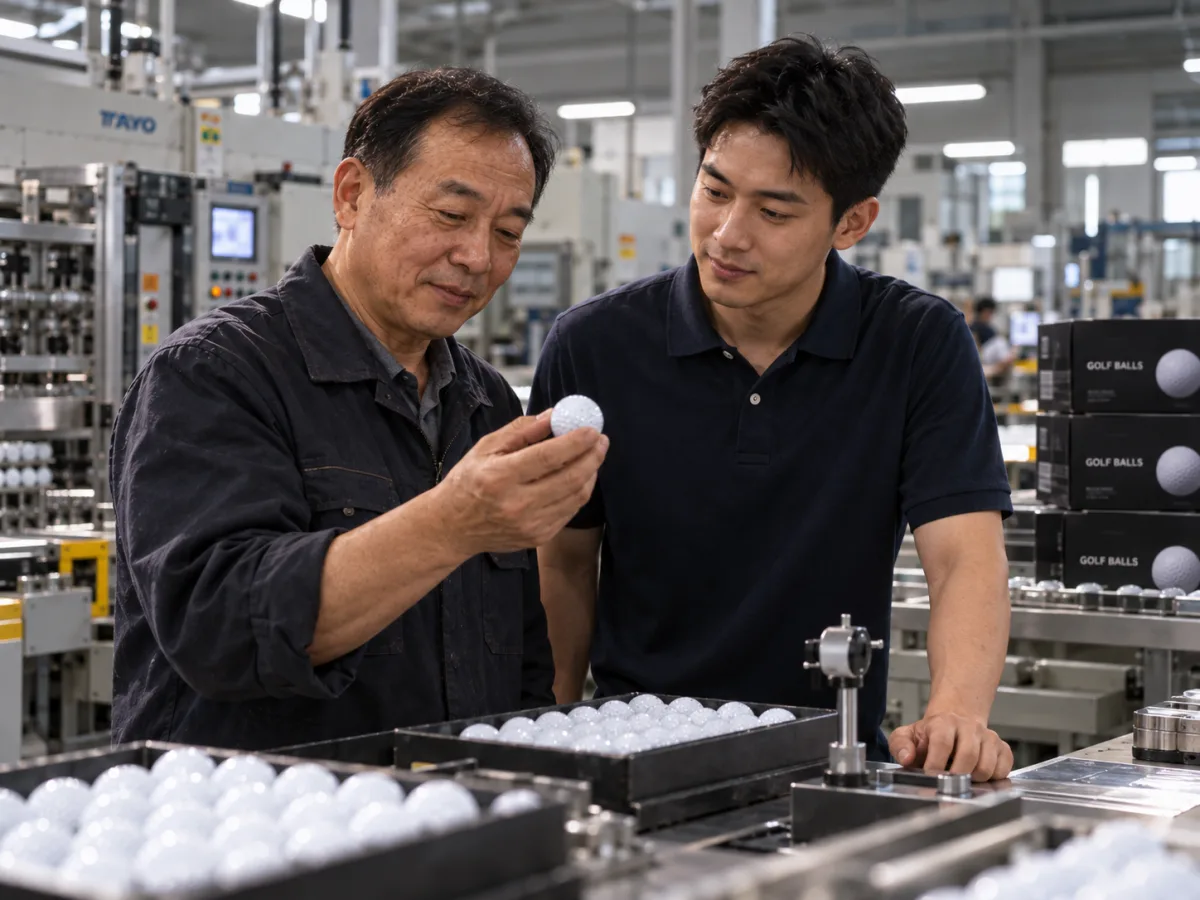
After vulcanization, cores are trimmed and ground to the required diameter and roundness. During injection molding, centering pins hold the core in position so the surrounding layer can form evenly.
Finishing also varies by material. Our Surlyn balls are cleaned and printed before primer and topcoat application. Cast urethane balls receive primer, then printing, followed by a clear topcoat. Ink and coating compatibility matters: a logo can look correct when printed and still develop wrinkling or adhesion problems later.
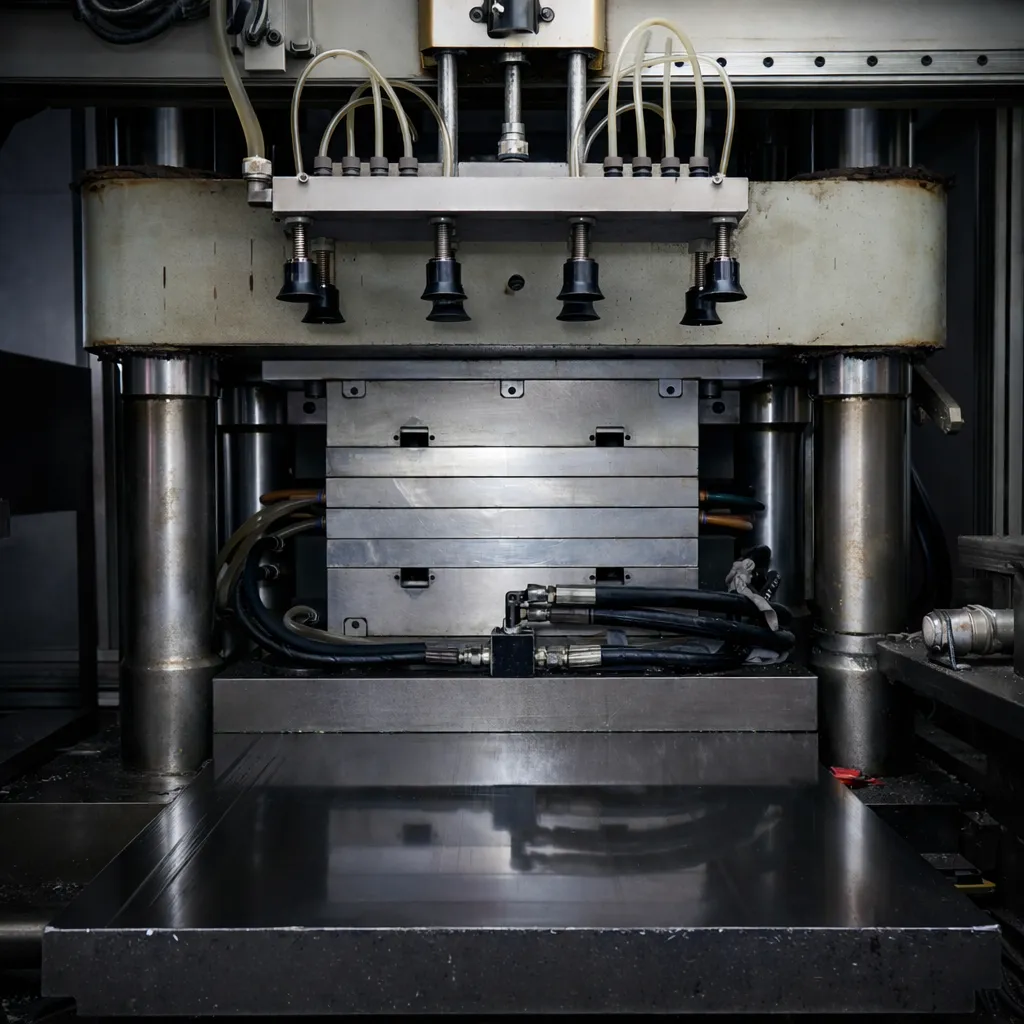
Step 05 · Core Grinding
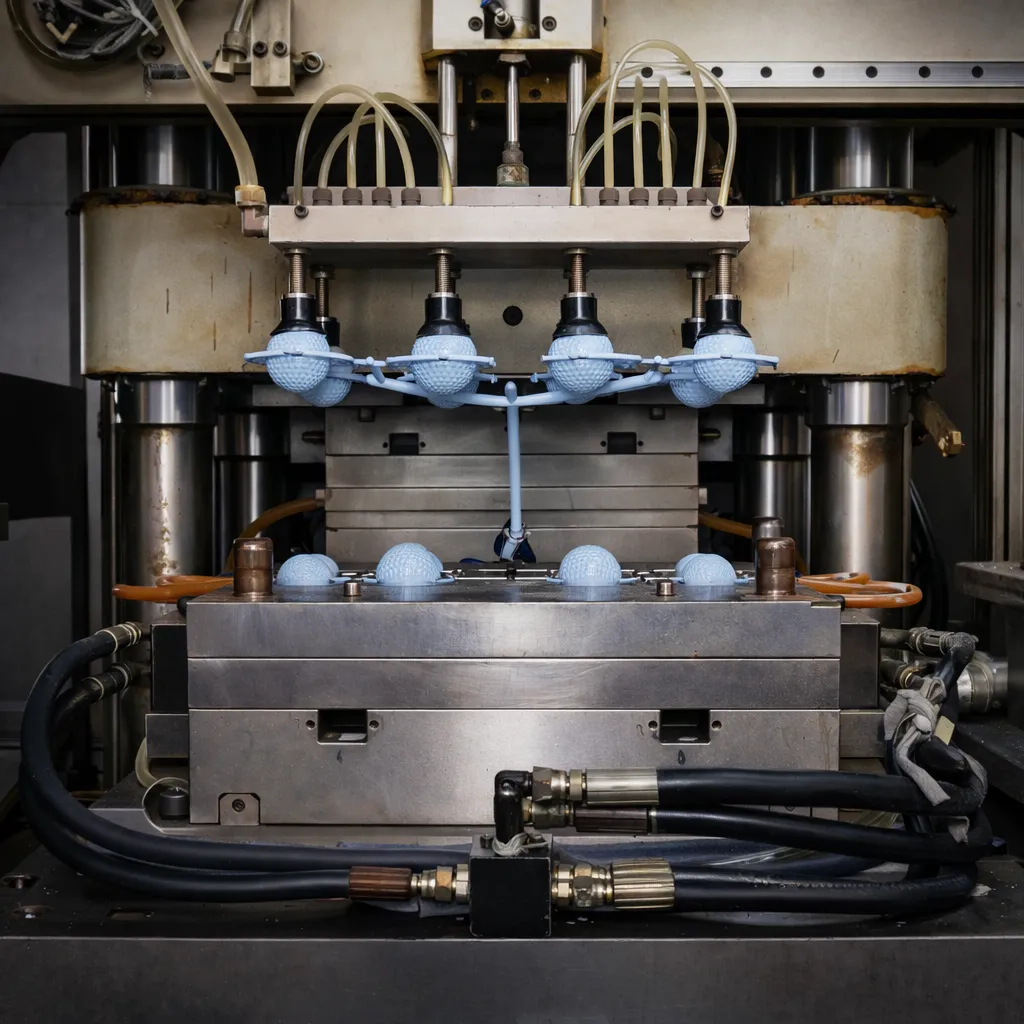
Step 06 · Urethane Casting
Understanding Customer Feedback
When a customer says a ball is not right, our first step is to understand what went wrong. Does the concern involve one ball or appear across the batch? Is it cover damage, feel, distance or something else?
An isolated defect, a batch issue and a model that does not suit its intended use need different responses. We work through those questions before deciding what to change. A driving range may prioritize repeated-use durability; a retail project may balance durability with feel, distance and price.
Final visual inspection checks for missing or incorrect printing and surface defects. Product specifications, required tests and acceptance criteria should also be agreed before production.

Final Visual Inspection
Checking surface defects, print clarity and logo adhesion
Product Development Beyond a Compression Number
A request for a softer ball starts with a conversation about what the customer wants to change: core hardness, cover hardness or the feel of the finished ball.
Depending on the construction, changes may involve the core formulation, mantle or cover materials, and processing. If a softer ball still needs to retain its rebound characteristics, the revised formulation needs evaluation against that requirement.
Our experienced technicians pay close attention to ingredient weights when preparing a compound. Rubber and compounding ingredients must be weighed to the specified formulation. A request that sounds simple to a buyer can require several related adjustments in production.
OEM and Private Label Golf Balls
We work with established golf brands, startups, importers, distributors, wholesalers, retailers and promotional businesses. A project can begin with an existing model or a discussion of construction, core formulation, compression, cover material and dimple requirements. Development scope is assessed for each project.
We consider target players, selling price, feel, distance, spin and durability together. Compression is useful information, but it cannot predict distance or spin on its own.
Custom golf balls can include brand colors, logos, ball numbers and alignment lines. Packaging options include three-ball sleeves, dozen boxes, gift boxes and bulk cartons. These decisions belong alongside model selection and order quantity when planning samples and production.
Tell Us About Your Golf Ball Project
Tell us your target market, intended use and estimated order quantity. If you have a preferred construction, performance expectations, branding, packaging requirements or target price, include those too.
You do not need to have selected a model. We can start with your market and price position, then suggest products to sample and customization options to discuss.